 A VPC Endpoint is considered idle when it has no or minimal traffic, yet continues to incur hourly charges. Such endpoints should be deleted to avoid unnecessary costs.
Subtitles are available in English, French and Spanish. Click here to get the full masterclass.
How to identify?
You can identify idle VPC Endpoints using the following methods:
From our Cost Optimizations Report, check at VPC_Idle_Endpoints section.
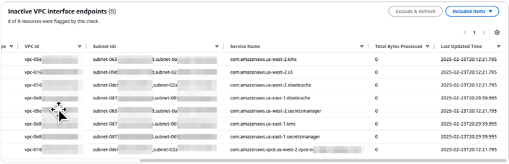
In AWS Console, go to Trusted Advisor, then select the Cost Optimization section. Click on Inactive VPC Interface Endpoints:
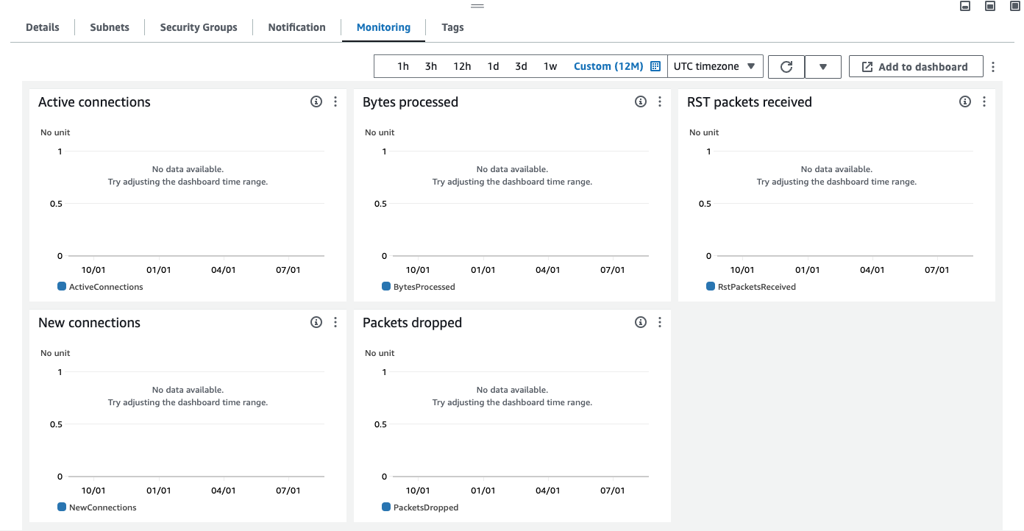
In AWS Console, navigate to the VPC service, then select the Endpoints section. Click on a VPC Endpoint of type Interface, then go to the Monitoring tab. Review data for at least the last 4 weeks (12 months recommended). If you see "No data available", the endpoint is unused.
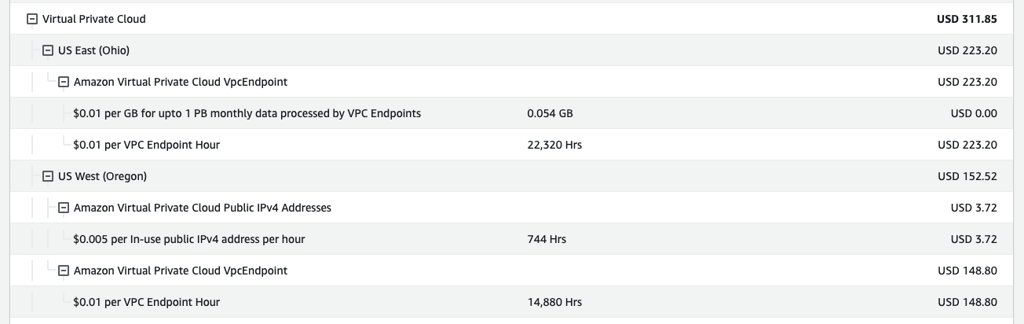
In AWS Console, go to Billing and Cost Management, then select the Bills section. Click on Virtual Private Cloud (VPC), followed by your region. If you have idle VPC Endpoints, you will see a line for VPC Endpoint Hours but no line for Data Processed. In the example below, VPC Endpoints were actively used in Ohio, while 7 idle endpoints in Oregon resulted in $149 of unnecessary costs:
How to fix?
Ensure the VPC Endpoint is no longer needed before deletion. It may be idle for a specific reason, such as a failover strategy.
In AWS Console, go to the VPC service, then select the Endpoints section. Choose the endpoint you want to delete, then click Actions > Delete VPC Endpoint. Confirm the deletion.
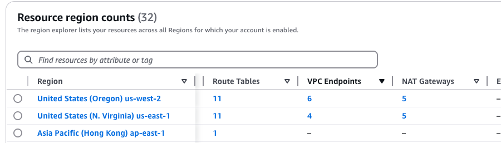
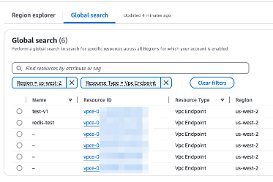
If you cannot see the endpoints, use the EC2 Global View service:
Note: If the VPC Endpoints are provisioned automatically (e.g., via CloudFormation or Terraform), update your infrastructure-as-code (IaC) to reflect these changes.